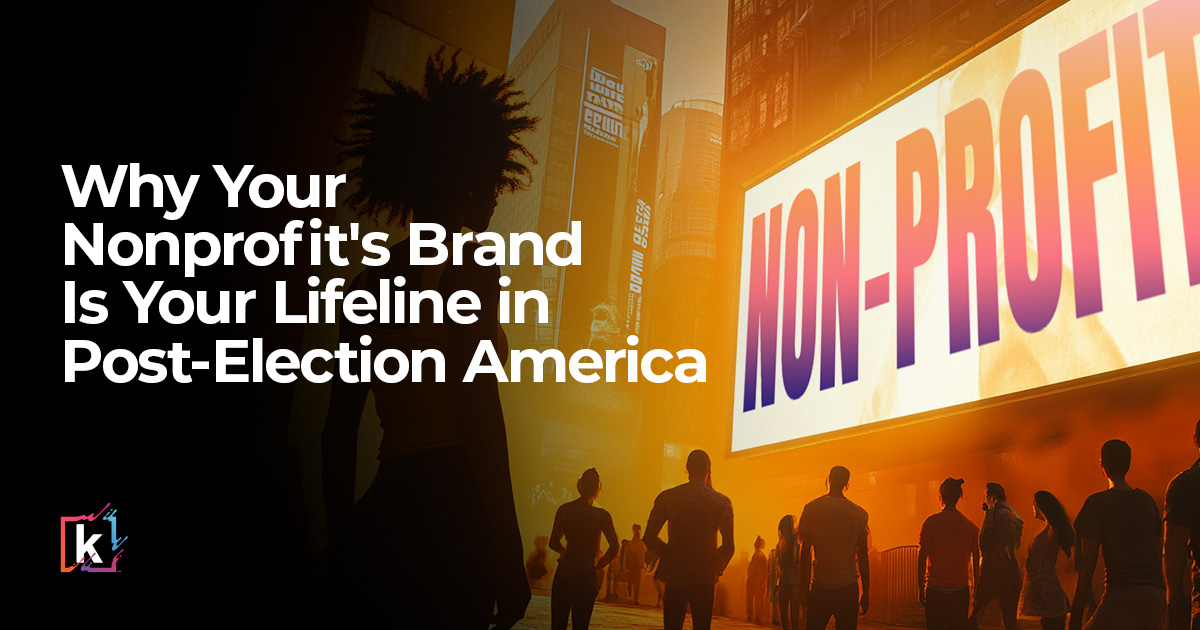
Why Your Nonprofit's Brand Is Your Lifeline in Post-Election America
The nonprofit landscape is about to get… spicy.
With the 2024 election reshaping how government funding will flow in 2025, many of us in the nonprofit branding space are facing an uncomfortable truth: we need to pivot, and fast. But here's the real tea – this challenge might be exactly the push nonprofits need to build stronger, more community-connected organizations.
The Funding Plot Twist No One Asked For
Remember when government grants were the reliable backbone of nonprofit funding? Yeah, those days are getting a major rewrite. As funding streams shift and sometimes disappear, we're all scrambling to answer one crucial question:
How do we keep providing essential services when traditional support systems aren’t there?
The answer lies in what I like to call "Community Connection Capital."
Community Connection Capital is the measurable value of authentic relationships, trust, and engagement that nonprofits build within their community. This capital has the potential to be converted into sustainable support and tangible impact. In the coming years, nonprofits and education organizations will need to convert this capital to generate real donor dollars and resources.
And this starts with rock-solid brand positioning.
Why Brand Positioning Makes All the Difference
There are roughly 1.9 million nonprofits in the United States. That's like trying to make your voice heard at a TEDx event with 1.9 million speakers all speaking at once. Pretty chaotic, right?
Here’s where most nonprofits get it wrong: branding. Your nonprofit’s brand isn't just a logo or a catchy tagline – it's your megaphone.
Why You Need A Powerful Megaphone:
Quicker Trust Building
- A clear brand position helps donors and volunteers understand your impact in seconds.
- Consistent messaging builds credibility and recall.
Emotional Velcro
- Strong brands create “sticky” emotional connections.
- They transform passive observers into passionate advocates.
The Differentiation Game
- Your unique value proposition becomes crystal clear.
- Donors understand exactly why they should choose you over others.
The Secret Sauce: Community-Centric Branding
It’s a hot take but your nonprofit’s brand needs to be more than professional. It needs to be personal. Think of it as building a bridge between your mission and your community's heart. Many donors are giving because of emotional connection. *cough, the real end goal of building Community Connection Capital, cough*
Key Ingredients:
- Authentic storytelling that showcases real impact by going beyond numbers on an infographic to share the stories of real people and experiences.
- A clear, consistent visual identity that's instantly recognizable.
- Messaging that speaks your community's language.
- Call-to-actions (CTAs) that make involvement feel natural and necessary.
Your nonprofit needs the right combination of these ingredients to create connections that only your brand can. The challenge is rarely whether an organization can connect with their audiences and mobilize them—it’s that audiences don’t even know the organization exists or how to connect with it in the first place.
The Dreaded Money Talk
Let's address the elephant in the room: funding. With government support becoming unpredictable, your brand becomes your most valuable fundraising asset. Here's why:
- Strong brands can increase revenue by 23%.
- Organizations with strong brand recognition benefit from higher donor retention rates, with 93% of nonprofits agreeing that a cohesive brand identity boosts connections. A robust digital presence leads to a 12.7% growth for digital-first nonprofits, largely from online revenue..
- Well-positioned organizations spend less on donor acquisition.
- Loyal supporters become ambassadors, expanding your reach organically.
Corporate partnerships are another facet that nonprofits shouldn’t overlook. Again, a hot take, but in my experience for corporate partnerships to truly thrive, they must be mutually beneficial.
Most corporate partners are looking to amplify organizations that are doing impactful community work. However, they fail if a nonprofit’s branding appears outdated or subpar. They don’t want to risk their brand position or authority by highlighting a partner they may see as “less than” from a branding perspective. It’s tough to hear but that’s the reality. Organizations with strong brands see a 57% increase in corporate partnerships.
You don’t have to be the coolest kid in the room to win connections and funding, but you do need to be visible and stand out.
Where To Start
Ready to build out your nonprofit's brand? Start here:
1. Audit Your Current Position
- What makes you different?
- Who are you really serving?
- What's your unique story?
- Who are your real competitors, and how are they positioned?
2. Clarify Your Message
- Can someone understand your impact in 10 seconds?
- Is your CTA crystal clear?
- Does your messaging resonate emotionally?
- Are you using the right platform for your message?
3. Build Your Visual Identity
- Is your look consistent across all platforms?
- Do your visuals tell your story?
- Is your brand inclusive and accessible?
- Can supporters easily share your content?
- Does your brand stand out from competitors?
Going Beyond Survival Mode
Having worked in marketing for almost 10 years, I understand the panic, fear, and anger that come with funding challenges. But I’ve also seen that our communities will show up for the “whos” and “whats” they believe in. Ten toes down. As organizations we have to show up first so that our people know where to be.
The post-2024 landscape will separate the good nonprofits from the exceptional ones. In this new era, it’s not just how undoubtedly amazing your cause is. It’s about how effectively you can demonstrate your tangible impact on real lives.
Remember: Every dollar you invest in building a strong, clear brand today is an investment in your nonprofit's sustainable future. Your community needs you more than ever. Make sure they can find you, trust you, and support you.
Are we going to just survive the next four years, or are we going to thrive?